Welcome to the 2026 Stadium and Venues special edition of SOLiD Connections. We’ll bring you up to date on the latest developments in stadium and venue wireless solutions, here at SOLiD and across the industry.
There’s no better place to start than the 2026 World Cup, hosted by the US and culminating on July 19 at MetLife Stadium in New Jersey.
Connecting the 2026 World Cup: By the Numbers
48 teams, 16 venues, and 104 matches
≈ 6 billion fans will tune in via TV or online.1
>11 million expected to attend in person.3
≈2 EB of data expected to be consumed.1
≈50 TBs of data consumed per match.2
1Ynet News
2North American Outlook Magazine
3US Travel Association
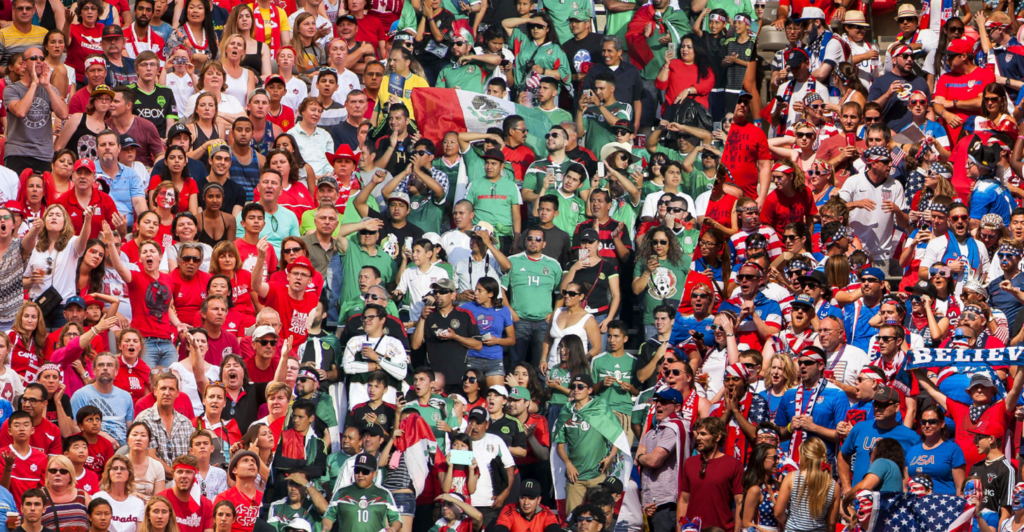
DAS to Play a Key Role in Connecting the World to the World Cup
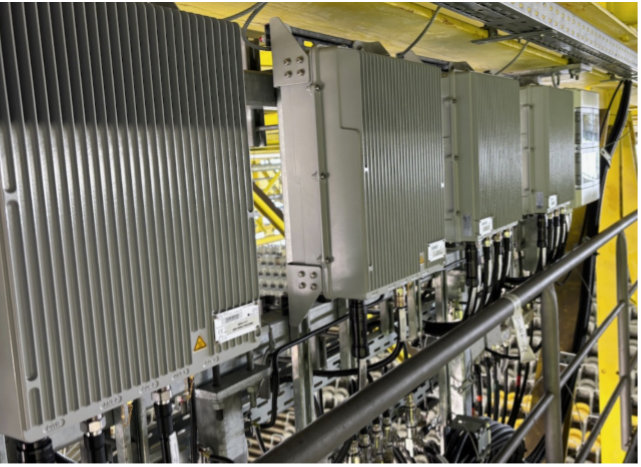
Verizon, FIFA’s technology partner for this year’s World Cup, will rely heavily on DAS technology to provide fans a connected and immersive experience. In preparing for the event, Verizon has installed thousands of DAS antennas across host stadiums, positioning them under seats, along concourses, and within concession areas.
This approach serves two critical purposes: it brings the signal closer to users, dramatically improving signal strength and data rates; and it allows the network to be divided into small “cells,” each serving a limited number of fans to prevent any single antenna from becoming overloaded.
These hyper-directional antennas are strategically positioned to target specific seating sections, minimizing interference between adjacent antenna cells—a critical consideration when thousands of mobile devices are used in close proximity, such as in stadium and arena seating areas.
To learn more about how DAS is connecting soccer fans, teams, first responders, and stadium operations personnel at the World Cup matches, check out the article “How Telecom Operators are Enabling the Most Connected FIFA World Cup” from Telecom Drive.
Strategic Patience and Planning Pays Off
In soccer, great offenses don’t rush; they use their vision, look for the hole, then accelerate through. It’s a combination of patience, vision and momentum.
For decades, SOLiD has used that same strategic approach to help stadiums and venues advance their DAS coverage and capacity capabilities. The key has been our commitment to modular, scalable and flexible DAS design.
Recent industry acquisitions have opened an opportunity for us and our customers. To see how we’re exploiting it, check out this article in Stadium Tech Report
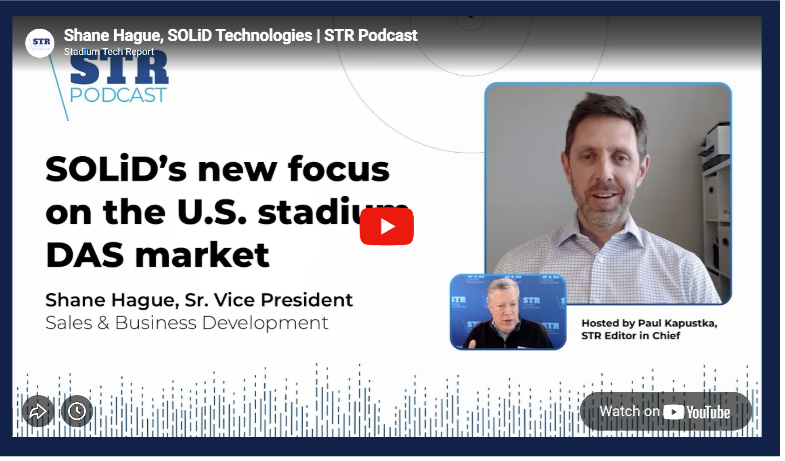
Insider Insights from Shane Hague
In this Stadium Tech Report podcast episode, SOLiD’s VP of Sales and Business Development, Shane Hague riffs on a range of topics that are relevant to stadium and venue owners. This includes the shift from carrier-funded projects to a model in which owners are expected to share more of the cost. This trend has also sparked increased interest in network-as-a-service (NaaS) arrangements that include tower companies and other third-party vendors.
How Network Slicing Enables Emerging Stadium Use Cases
As noted in the aforementioned Telecom Drive article, network slicing will play a big part in creating the virtual capacity needed to support this year’s World Cup, and for good reason. Network applications for stadiums and venues are rapidly evolving, pressuring network managers to upgrade their wireless infrastructure.
One approach is network slicing via DAS, which partitions a single physical network infrastructure into multiple, isolated, and customized virtual networks.
To learn more about the benefits of DAS-supported network slicing, check out our recent blog, How Mobile Network Slicing Boosts Business.
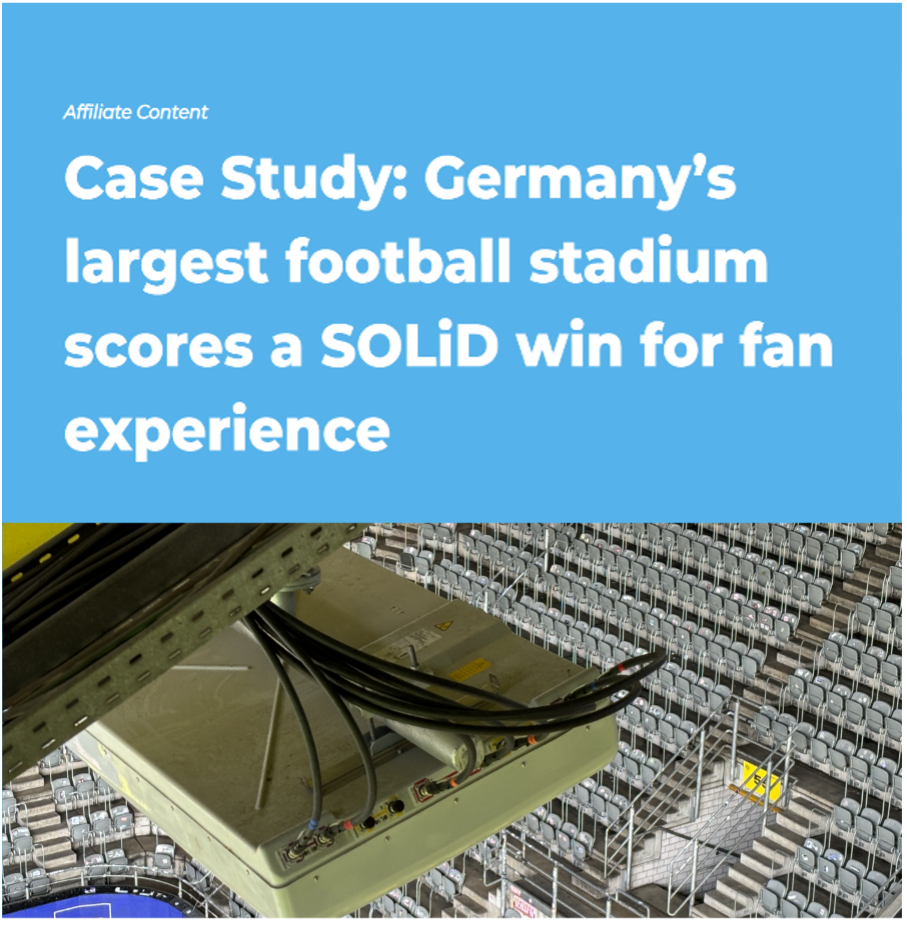
SOLiD Helps Historic Stadium Connect to the Future
Before
- 50-year-old communications infrastructure at Europe’s 8th-largest stadium needed an upgrade.
- Huge capacity demand, frequent traffic fluctuations, and RF interference were affecting performance.
- Project sustainability, efficiency, and affordability were critical.
After
- The world’s first 5G Open RAN stadium network.
- Best-in-class connectivity supports all four of Germany’s main network operators.
- Seamless, high-speed 5G / 4G coverage, lower total cost of ownership.
- A new standard for next-generation, in-building stadium and arena networks.
Read the case study to see how we did it.
Connecting Next-Gen Stadiums with nGENESIS
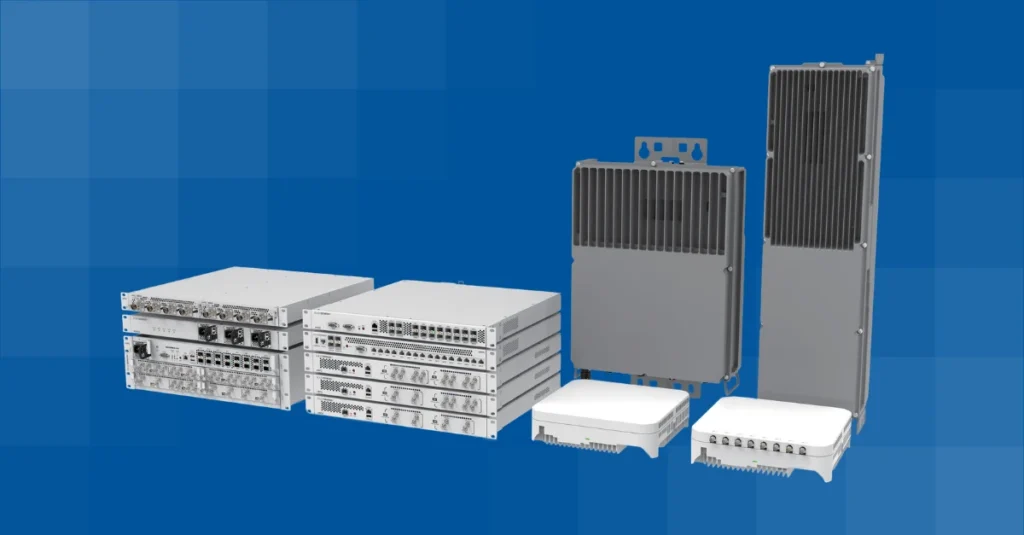
Tomorrow’s connected stadium will offer a ubiquitous, predictive, immersive, and intelligent fan experience. Underpinning these capabilities will be a wireless communications infrastructure that is agile and scalable, able to handle massive capacity demands, ultra-low-latency requirements, and seamless integration with the venue’s operational systems. Nothing handles the gameday pressure like our newest DAS offering, nGENESIS.
nGENESIS Digital DAS
- 25G fiber links, up to 2,380 MHz per dual fiber
- Cut space and power requirements in half
- Native, multi-carrier O-RAN integration
nGENESIS Digital DAS is an ideal neutral host solution for large stadium environments. High-capacity 25G fiber links deliver maximum bandwidth with minimal infrastructure, up to 2,380 MHz per dual fiber. nGENESIS also conserves energy and space with a compact, power-efficient headend and radio nodes that can cut your power consumption in half. nGENESIS DAS supports both O-RAN and traditional RF RAN connections for maximum flexibility.
Learn how SOLiD’s new nGENESIS DAS can help you prepare your stadium for what’s next.
Thanks for Reading. Let’s Stay Connected.
That wraps up our 2026 Stadiums and Venues special edition of SOLiD Connections. Thanks for reading. Have any suggestions for future issues or want to learn more about a specific topic? Contact us and let us know. We’ll see you next month. Until then, let’s keep in touch and stay connected.